The Just Post It Playbook
Your content probably doesn't need to be better. It needs to get posted.
Yesterday, during one of our quarterly Plandipity Doers mastermind calls, we got onto a topic that I swear comes up ALL the time.
One of our members was talking about photographing the jewelry she makes. She has a light box. She has backgrounds. She has all the things she needs to take really nice product photos.
And she does take them.
The problem is that then she starts worrying about them.
How is the light reflecting off this stone? Is this the right background? Does this look professional enough? Should I edit this? Should I take another one?
So she takes a bunch of photos. She edits them. She overthinks them.
And then sometimes she doesn't use them at all.
And my reaction was basically:
You've got to stop.
Not stop caring about what your business looks like. Not start taking terrible pictures. And I'm certainly not telling her to throw away the light box.
But we have to stop turning every single piece of content into a professional production.
Because you know what the perfectly lit, beautifully edited photo sitting unused in your camera roll is doing for your business?
Nothing.
What if it looked like something a friend sent you?
There is absolutely a place for beautiful product photography.
If I'm shopping on your website, yes, please give me a clean photo on a simple background so I can see exactly what I'm buying.
But you don't need 27 versions of that photo on social media.
Show me the bracelet on someone's wrist while she's holding her coffee.
Put the necklace next to the outfit you're planning to wear it with.
Show me your hands making it.
Take a quick video while you're packing an order.
Show me the three bracelets you can't decide between before you walk out the door.
I want to think:
Oh, I'd wear that.
Or:
My friend would LOVE that.
That's different from making me think:
That's a beautifully photographed piece of jewelry.
And I think that's a distinction we miss sometimes.
We spend so much time trying to make our content look professional that we forget what we're actually trying to get people to do.
I don't need to admire your content.
I need to see myself in it.
Somewhere along the way, we turned content creation into content production
I've been teaching some version of this for years, and I still have this conversation with business owners all the time.
We think we need to get ready.
Find the perfect location.
Set up the lights.
Write the script.
Take 37 versions.
Edit the video.
Find a trend.
Figure out how the person in the trend made the words magically appear at exactly the right second.
Open Canva.
Move everything two pixels to the left.
You know exactly what I'm talking about.
And eventually we're exhausted.
Or overwhelmed.
Or we have 47 drafts and nothing actually posted.
Here's the thing: we're small business owners. We're not full-time content creators.
There are content creators who are REALLY good at this stuff. They can make an edit look ridiculously easy that would take you three hours and six YouTube tutorials to figure out.
Ask me how I know.
I still remember the first time I tried to make one of those videos where you point and the words pop up on the screen at exactly the right time.
This is going to sound ridiculous now because those videos are everywhere.
But I swear it took me basically an entire day to figure it out.
For me, learning that made sense. This is part of what I do. I can spend the day figuring something out so eventually I can make it in 30 minutes—or teach someone else how to do it without them wasting an entire day.
But does every small business owner need to do that?
No.
Please don't.
The goal isn't to become really good at making content.
The goal is to use content to help people get to know you and your business.
Those are two very different things.
Less polished doesn't mean careless
Whenever I tell people that less-polished content often works better, I want to be really clear about this.
I am NOT telling you to make bad content.
I'm telling you to make content that feels like a human made it.
Think about what happens when you're scrolling and something comes up with perfect lighting, perfect framing, a perfect script, perfect everything.
We recognize an ad pretty darn quickly.
Our brain goes, Someone is about to sell me something.
Scroll.
But then somebody pops up sitting in her car saying, “Okay, this happened yesterday and we need to talk about it.”
And for some reason, we stop.
Which is funny when you think about it. Why are we all apparently sitting in our cars talking to the internet?
I've done it too.
And some of those videos have done really well.
I think part of the reason is that it feels like a conversation. It feels like something that happened right now. It feels a little bit like your friend saying, “Okay, you're not going to believe this.”
That's what I mean when I say unpolished.
Not ugly.
Not sloppy.
Human.
So, what do we do instead?
This is where I want you to start making some swaps.
Not all of them tomorrow. We're trying to make this EASIER, remember?
Pick one.
Instead of waiting until you're ready to film, use the days you're already ready.
Going to a networking event?
Great.
You're dressed. Your hair is done. Maybe you've even put on makeup.
Think about that ahead of time.
Could you block an hour afterward and record a few videos?
Change your shirt. Move to another chair. Put your hair up.
Boom. You've got several videos.
You don't need to go through the entire getting-ready process five different days to create five pieces of content.
That's what batching is really about for me.
It's not about turning yourself into some sort of content machine.
It's looking at what you're already doing and asking:
How can I make this work a little harder for me?
Instead of recreating the complicated trend, find the simple version.
If you're watching a Reel thinking, How the heck did she DO that?, that might be your sign that this isn't the trend you need today.
Seriously.
Pick another one.
Use B-roll.
Set your phone on your desk and record yourself working.
Film your hands making the thing.
Record yourself walking into the shop.
Pan across your workspace.
Five seconds of video and a really good hook can give you an entire piece of content.
This is actually one of the reasons I include current trends in the monthly Content Caboodle I create for Plandipity Doers members.
I don't want you spending three hours scrolling Instagram trying to figure out what's trending and then another three hours trying to figure out how somebody made it.
I try to find trends that are current but also realistically doable for a small business owner. Then I break them down and give members ideas for how they could actually use them in their own businesses.
Because I would much rather you spend your time running your business than trying to reverse-engineer a Reel.
And if there's something you REALLY want to try but you have no idea how they did it?
Ask us.
Drop it in our community.
Maybe I know. Maybe another member knows. Maybe I need to go figure it out.
You might not get an answer this exact second, but there's a pretty good chance we can save you from spending half your day trying to figure it out alone.
That's part of why community matters.
You don't need another full-time job as a content creator. You need marketing to fit into the business you're already running.
Instead of designing every graphic from scratch, make a handful of templates.
Five to seven.
That's it.
Have someone make them for you if design isn't your thing, or sit down once and create a handful of branded templates you can keep going back to.
And yes, eventually you're going to get bored with them.
Your audience isn't.
They aren't staring at your Canva folder every day like you are.
There is still absolutely a place for branded graphics. Not every post should be one—I actually don't think most of them should be—but they have a job.
They keep your branding familiar.
Someone sees it and starts recognizing, Oh, that's Sam.
That's consistency.
You do not need to reinvent the design every Tuesday.
Instead of taking 37 photos, take the picture.
Is it clear?
Can I see the thing?
Does it communicate what you wanted it to communicate?
Great.
Post it.
I promise nobody else is zooming in on that tiny thing in the corner you've been staring at for the last 20 minutes.

Simple content still needs strategy
Now, I don't want you to take all of this and think I'm saying strategy doesn't matter.
It absolutely does.
Simple doesn't mean generic.
And this is where we need to talk about hooks.
We've all heard it:
You need a hook.
You need a hook.
You need a hook.
We've heard it so many times that telling someone to “write a good hook” isn't particularly helpful anymore.
So here's how I think about it.
Your hook should make the right person think one of two things:
She's talking about me.
or
Wait. I need to hear the rest of this.
For example:
“Networking tips for business owners.”
Fine.
But what about:
“If you spend the first ten minutes of a networking event pretending to be very interested in your phone, try this.”
Oh.
Hi.
You're talking to me.
Or instead of:
“Tips for photographing your products.”
What about:
“If your camera roll is full of product photos you've never posted, this is for you.”
You don't have to identify your audience by their job title every time.
Sometimes describing what they're doing, thinking or struggling with makes them feel WAY more seen than saying “Hey, business owner!” ever could.
That's the point.
Specificity.
I want the right person to think:
Wait. That's me.
You've just earned yourself another few seconds of their attention.
Your hook is not the whole post
While we're here, can we please talk about text on Reels?
Your hook is not your caption.
Please don't put the entire lesson on the screen.
And yes, I'm looking at you, AI.
I love AI. I use it all the time.
But sometimes you ask it for text overlay and suddenly it wants you to put a small novel over your face.
No.
Your hook has one job:
Get me to stop.
That's it.
Then let the video do its job.
Let the caption do its job.
Let your call to action do its job.
The first three seconds do not need to do everybody else's jobs too.
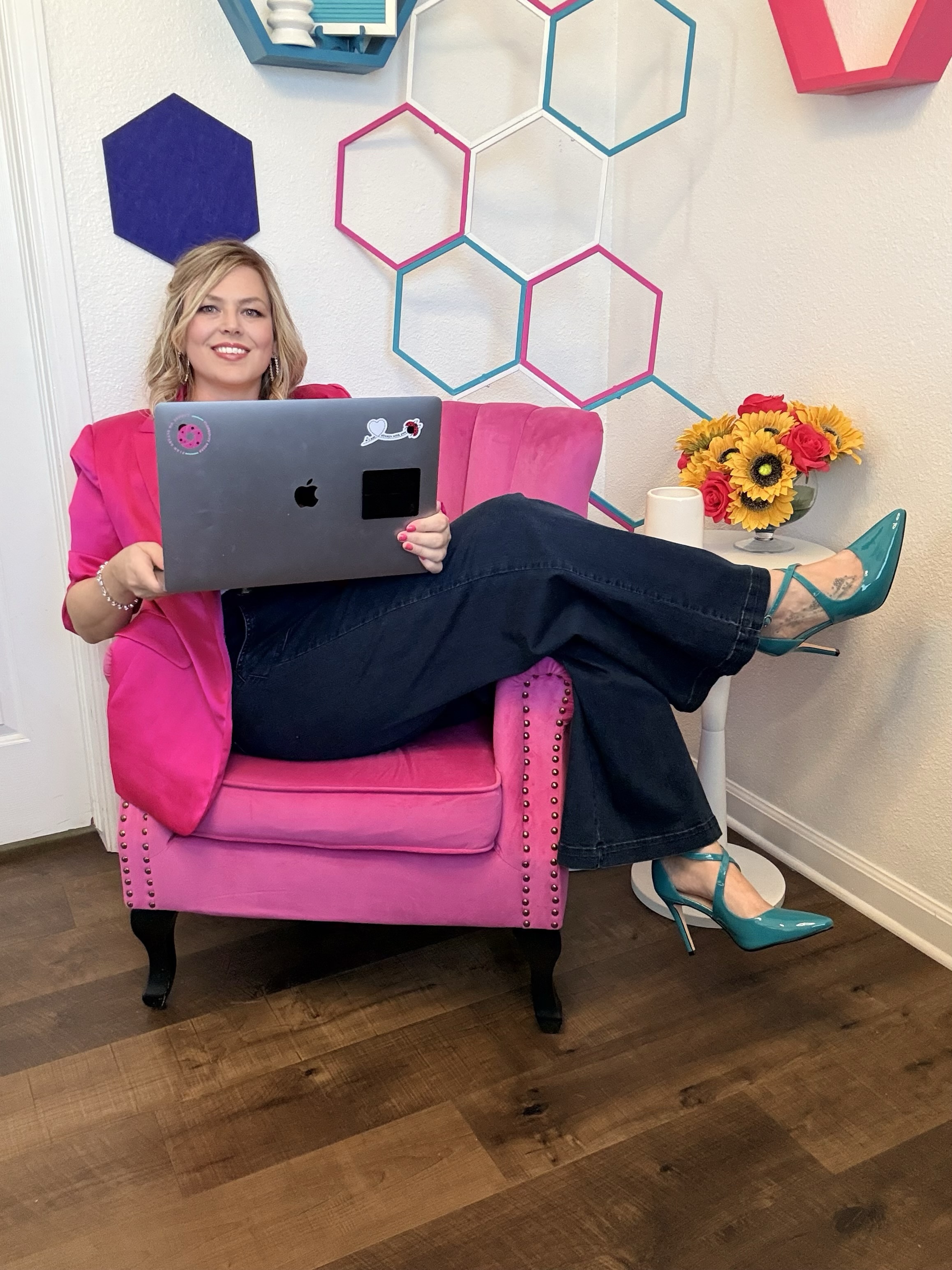
Yes, you can talk about yourself
This one feels a little weird because we've spent YEARS hearing:
Don't make your marketing about you.
And I still agree with that.
Ultimately, your marketing needs to connect back to the person you're trying to help.
But the way we consume information has changed.
There is SO MUCH information available to us now.
I don't necessarily need another person to give me five generic tips I could find in 400 other places—or ask AI for in about four seconds.
I want to know what you do.
What have you tried?
What happened?
What would you do differently?
What do you tell your clients?
What have you noticed because you've done this 100 times?
If I see you doing something I want to be able to do, I want to know how you do it.
That's valuable.
So instead of:
“How to create a month of social media content.”
I'd much rather hear:
“If I only had two hours to create a month of content, here's exactly what I'd do.”
Now I'm listening.
Your experience isn't getting in the way of the lesson.
Your experience IS part of the lesson.
Okay, but how do I actually write the hook?
Start with three things:
WHO + EXPERIENCE + CURIOSITY
You don't need all three every single time. This isn't another formula you have to follow perfectly.
It's just somewhere to start when your brain is giving you absolutely nothing.
Try:
“If you're a [specific person] who keeps [specific struggle], try this.”
“Here's what I would do if I had [constraint] and needed to [desired result].”
“I used to [common approach]. Now I [different approach], and here's why.”
“This is what I tell my clients when they [specific situation].”
“If I had to start [specific thing] over tomorrow, I'd skip [common approach] and do this instead.”
“The next time you're about to [common behavior], try this first.”
Use them as starting points.
Change the words.
Make them sound like you.
And please remember:
The text on your video is not the caption.
Give me enough to stop me.
Then tell me the rest.
Before you spend another 30 minutes messing with it...
Ask yourself:
Will the right person recognize themselves in this?
Does the first line give them a reason to stop?
Does this actually sound like something I would say?
Can someone quickly understand what this is about?
And then ask yourself the question I REALLY want you to answer:
Am I still editing because this actually needs to be better—or because I'm nervous to post it?
Because those are not the same thing.
If it's clear, useful, sounds like you and your person will understand why it matters...
Just post it.
Then walk away.
Seriously.
When I was getting comfortable creating content, sometimes that's exactly what I had to do.
Post it.
Don't stare at it.
Don't check it 14 times.
Don't decide ten minutes later that your voice sounds weird and delete it.
Leave it alone.
Go make another one.
Because you don't magically become confident enough to create content and then start posting.
You get more confident because you keep doing it.
Your first posts might make you cringe a little.
That's okay.
There can't be anything for people to binge if you never get past the cringe and actually put something out there.
And the more you do it, the easier it gets.
The things you're overthinking today eventually become the things you don't even think about anymore.
Your content doesn't need a bigger production. It needs a simpler system.
If you take one thing from this entire rant—and yes, apparently this became a rant—let it be this:
Consistency isn't about becoming disciplined enough to maintain an unnecessarily complicated content system.
Sometimes consistency comes from making the system easier.
Capture things while you're already doing them.
Batch when you're already ready.
Reuse the templates.
Choose the easy trend.
Tell us what actually happened.
Talk like a person.
Make the hook specific.
And then hit Post.
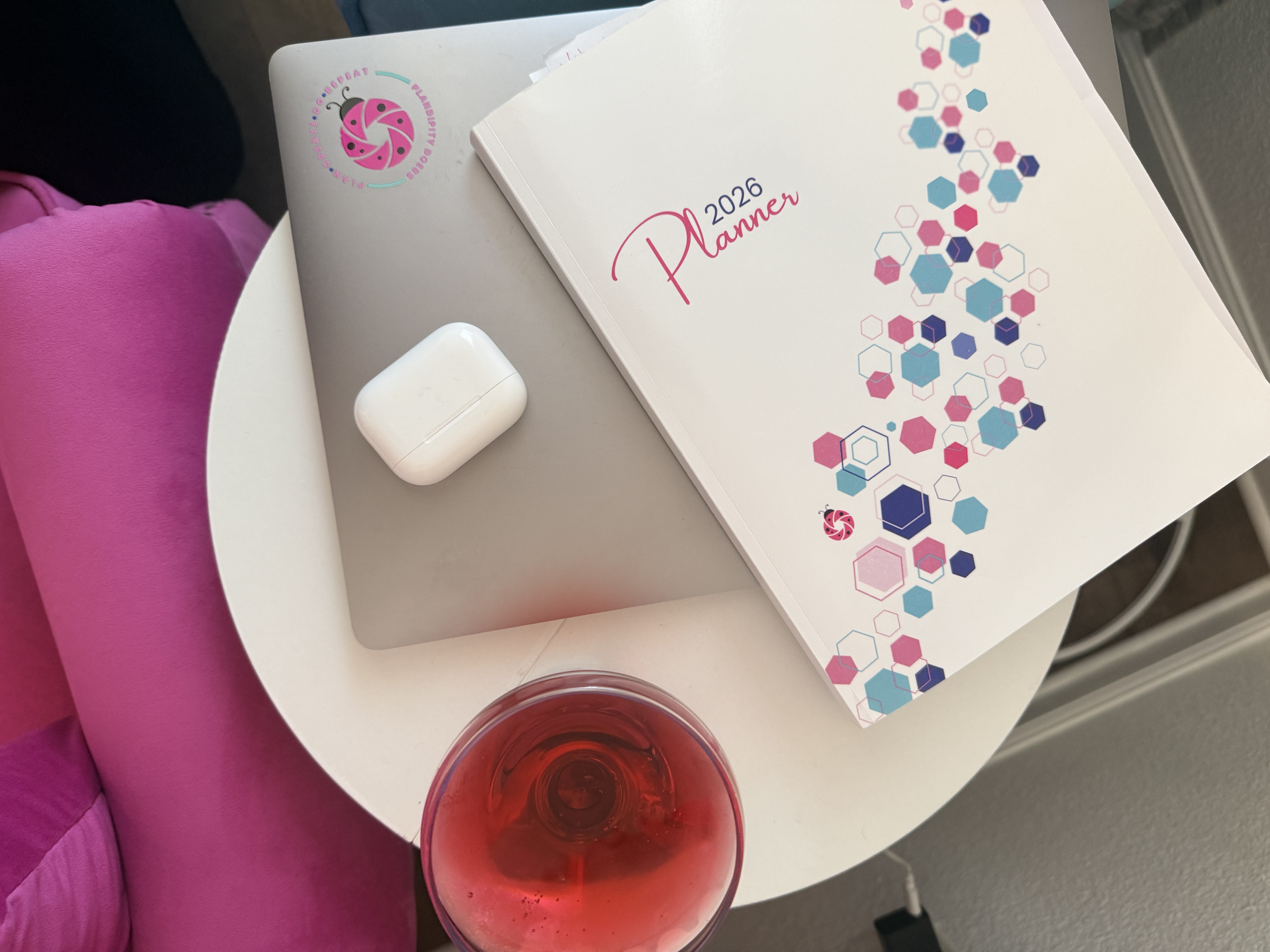
Because your business gets absolutely nothing from the perfect piece of content sitting in your drafts.
People have to see you before they can get to know you. So let them.
Ready to stop doing this alone?
You've been doing this by yourself long enough. Come build it with people who are building too.